
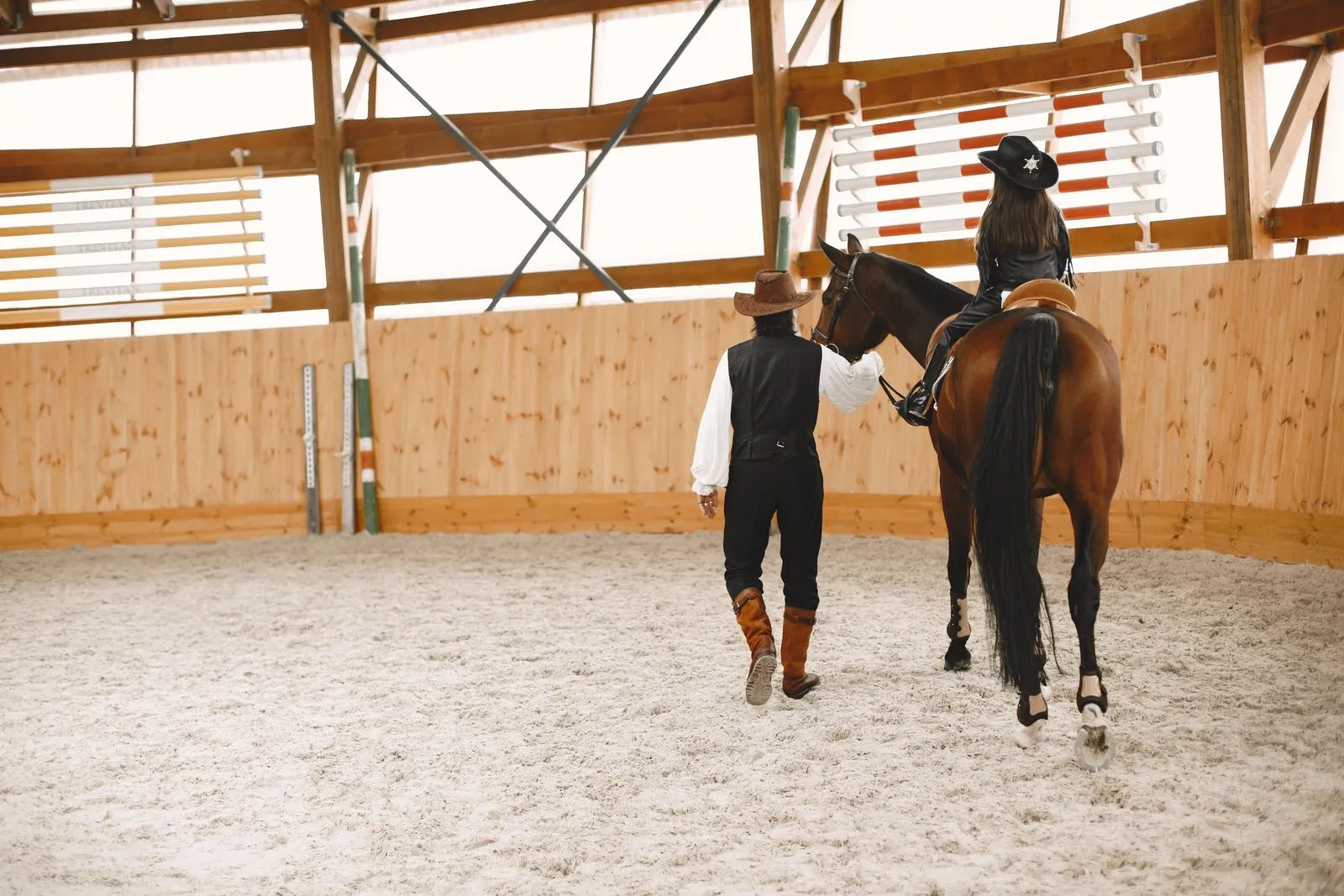
Uneven trails can feel unpredictable when the ground changes from packed dirt to rocks, roots, slopes, or loose footing. Confidence comes from preparing your body and mind, reading the path ahead, and giving your horse clear, consistent cues. Rather than rushing through difficult sections, practice foundational habits on terrain that matches your current ability. A qualified instructor can help you recognize what to do, when to slow down, and how to progress safely.
Set Up a Balanced Seat
Keep your posture tall but relaxed, with your shoulders aligned over your hips and your eyes looking ahead. Let your legs rest evenly against the horse rather than gripping tightly. A balanced seat helps you follow the horse’s movement without tipping forward or pulling on the reins when the ground changes.
Use light, steady contact and make small adjustments instead of abrupt movements. On a slope, your instructor may show you how to adapt your position while staying centered. Practice these changes at a walk in a safe area before trying them on a trail.
Read the Trail Ahead
Scan several yards ahead so you have time to notice rocks, roots, ruts, water, and changes in slope. Choose a clear line through the section and keep your focus beyond the obstacle, not fixed on your horse’s feet. If visibility is limited, reduce speed and give yourself more time to assess the route.
Ask your horse to approach unfamiliar footing at a calm walk. Allow room for careful steps, and avoid steering sharply at the last moment. If a section feels beyond your experience or the horse seems uncertain, pause in a safe spot and choose a simpler route.
Practice Calm, Clear Cues
Nervousness can lead to a tight seat, held breath, or inconsistent rein pressure. Before a challenging stretch, exhale, soften your hands, and check that your legs remain relaxed. Give one clear cue at a time, then allow your horse a moment to respond. A steady pace is often more useful than trying to push through quickly.
Build difficulty in small steps. Practice on mild slopes or firm, uneven ground before moving to loose rocks, narrow paths, or steeper terrain. Repeat a section only when you and your horse remain composed, and take breaks when either of you becomes tired or tense.
Use Instruction to Progress
An instructor can help match trail choices to your current skills and your horse’s experience. They can observe your balance, timing, and rein use, then give specific feedback while you ride. This makes it easier to spot habits you may not notice on your own, such as leaning into a turn or gripping when the footing changes.
Ask to work on one challenge at a time, such as riding a gentle slope or choosing a line around roots. Discuss what to watch for and how to respond if your horse hesitates. At Memphis Trail School, riders can seek instruction that helps turn those skills into a steady, step-by-step trail routine.
Confidence on uneven trails grows through balanced basics, thoughtful route choices, and practice at a manageable pace. Keep sessions focused, listen to your horse, and ask an instructor to help you prepare for terrain that feels new. With a clear plan and patient repetition, you can approach changing footing with greater calm. Consider booking a lesson when you’re ready to build your trail skills.